2015/01/27

Rod Review: Sage ESN 2100 and Greys FX2 2 wt 10'

Time for another rod review. This time I'll do a little side by side review comparing what is arguably one of the best European style nymphing rods, the Sage ESN 2100 (2 wt 10'), with the entry level Greys Streamflex FX2 2 wt 10'. Both are four piece rods.

As one would expect. These are very much specialty rods designed for sensitivity and presenting nymphs with fine tippet in a variety of conditions. However, because of this specialization both are manufactured in limited quantities and repairs and replacements can take time--as I discovered. Add this to the fact that Greys has been discontinued in North America, and you are looking at what may be considered a "one time buy".

Aesthetics:

The ESN is a beautiful rod. Sage has really pulled out the stops and built a highly functional rod in a gorgeous package. I won't bother to quote the company blurb, but this is like the Ferrari or Aston Martin of nymphing rods. Dark forest green glossy body, dark green wraps, immaculate finish on all components, and a solid single ring up locking reel seat. It incorporates one Fuji ceramic stripping guides and 10 hard chrome snake foot guides to the tip. It comes in a a super light 79.3 g (2.8125 oz). Add in a beautiful cocobolo reel seat insert and perfect half well cork handle and you've got one sexy piece of kit. (MSRP $695 US)

If the ESN is a Ferrari, the Greys is an economical family car. Dependable, a little stylish and made overseas. Not to say that the rod is in any way ugly. I described the 3 wt Streamflex in a previous review as "top notch" for fit and finish and the 2 wt XF2 follows this mold. The only visual difference is the anodized reel seat insert "cage" seen in other rods on the market. This rod has a single ceramic stripping guide and 9 chrome single foot guides to the tip. This rod comes in at 90 g (3.17 oz), and also features a half well handle made of slightly lower quality cork than the ESN. (MSRP $300 US)

Performance:

In spite of their common application both rods are different beasts.

The ESN has a ultra fine top section progressing to a stiff strong butt. The tip flexes extremely well to protect fine light weight tippets, while the butt makes controlling larger fish a simple task. In a lot of respects it has all the hallmarks of a typical modern Sage rod: it's fast, recovers quickly and casts crisply and cleanly. My largest fish to date with this rod has been in the 14" range and at no point have I ever felt under gunned.

The Streamflex is much closer to a traditional rod in that the action is more uniformly progressive through it's length, although it's butt section like the ESN is more stout than with a traditional rod. The tip is soft and flexible and has protected fine tippet from breaking on some very large fish indeed. While I have landed fish in the 24" range with this rod, controlling larger fish with it is a bit of a workout.

Opinion:

Any rod review is going to have a strong subjective element, but I'll give you my opinion anyway. Leaving aside the price differential for a moment, both of these rods are excellent for the purpose for which they are designed--namely sensitively fishing for smaller trout with fine tippet and light nymphs. Both of course will do more than that, and this is where one might be better suited for your needs than the other.

If encountering larger fish is an issue and you need to throw a longer line as in French style nymphing, the edge has to go to the ESN. It's action and stiffer butt section lend themselves well to these applications.

If a comfortable casting stroke and wet fly or downstream presentations are more important, then the Greys gets the nod. It's slightly slower action and increased mid rod flex make casting very easy and I feel there is less chance of losing fish to the dreaded "bounce" on wet fly presentations.

If budget is a concern then the clear winner has to be the Greys. At less than half the price you've got a great nymphing rod that will allow you to do everything the more expensive ESN is designed to do in a well built package--but hey, if you can afford a Ferrari to shuttle the kids to soccer practice, then go for it. For what it's worth I'm keeping both.

Typical Rod Configuration(s) Used:

  • Lines: Rio competition nymph; Rio classic 1wt DT; Generic Trout Legend competition line
  • Reel: Hardy Flyweight
  • Leader: 20' Nymphing Leader/tippet


Similar rods used/tested:

  • Greys original Streamflex 3wt 10' and 4wt 11'


2015/01/14

Handy Tippet Size Conversion Tables


I've started buying tippet overseas and while I'd like to think I'm a metric kind of guy, I still find myself falling back on the old X rating system used in North America. Rather than having to look up the conversions on various websites, I thought I'd add these handy conversion charts to my blog for quick reference. The breaking strength shown in the North American chart is based on Rio Powerflex nylon (mono in fishing parlance), while the European chart is based on Stroft ABR nylon. (A little plug for the German Stroft--their nylon is rated at almost the same BS as fluorocarbon, and is available on spools from 25-5000m. Great value IMHO).

North American Measures
X Rating Dia. (mm) Dia. (in) BS (kg) BS (lb)
8X 0.076 0.003 0.7 1.5
7X 0.102 0.004 1.1 2.4
6X 0.127 0.005 1.5 3.4
5X 0.152 0.006 2.3 5
4X 0.178 0.007 2.9 6.4
3X 0.203 0.008 3.7 8.2
2X 0.229 0.009 4.5 10
1X 0.254 0.010 5.9 13
0X 0.279 0.011 6.8 15


European Measures
Dia. (mm) X-Rating Dia. (in) BS (kg) BS (lb)
0.06 9X 0.0023 0.7 1.5
0.07 8.5X 0.0027 0.8 1.8
0.08 8X 0.0031 1.0 2.2
0.09 7.5X 0.0035 1.2 2.7
0.10 7X 0.0039 1.4 3.1
0.11 6.5X 0.0043 1.6 3.5
0.12 6X 0.0047 1.8 4.0
0.13 5.5X 0.0051 2.0 4.4
0.14 5X 0.0055 2.3 5.0
0.15 4.5X 0.0059 2.6 5.7
0.16 4X 0.0063 3.0 3.6
0.17 3.5X 0.0067 3.3 7.3
0.18 3X 0.0071 3.6 7.9

2011/09/30

Greys Streamflex 10' 3wt Rod Review

I'm planning on doing a series of rod reviews based on my experiences with rods that I currently own or have really enjoyed using in the past. I'm going to keep the reviews general in scope and hopefully provide enough information to help someone in the market for a new or used rod a leg up on their research. Of course it stands to reason that if I've kept a rod in the arsenal, there is a good chance that the reviews will generally be positive.

The first rod up is the original Greys Streamflex 10' 4pc 3wt rod (now replaced by the new XF2 Streamflex line). The Greys brand is owned by Hardy, and represents their foray into the middle range of the market. You won't find any $10,000 reels under the Greys name, but you will find a range of products geared towards fishermen of more modest means (and I place myself firmly in this camp). In addition to this rod I own two of the now discontinued GRXii reels and a great heavy weight wading jacket. Most of the Greys products are manufactured in Asia, and the Streamflex is no different.

The components are fairly standard for rods in this price range with chrome snake, tip and stripping guides, a stabilized tiger wood reel insert and an anodized aluminum up-locking two screw reel seat. The colour of the blank is a subdued olive bronze with gold wraps, and the reel seat matches with a bronze matte finish. The fit and finish on the rod is top notch without any of the epoxy sagging you sometimes see from other offshore manufacturers--not surprising considering the Hardy connection. The two ring seat is a nice touch on the rod and the small rubber washer between the two helps keep the reel locked in place nicely. The only criticism I can level with respect to the components is that the size of the top guide is a bit smaller than I would like for passing knots, and the first stripping guide is a little far from the reel. It's a bit annoying to have to stretch to reach the line when it accidentally slips from your fingers.

The rod comes in at a modest 3.31 oz or about 94 grams. At that weight it is comparable with most rods in this price range, but some of the features such as the reel seat probably add a bit to the weight. I haven't noticed any significant issues with respect to the weight and casting and nymphing over an eight to ten hour fishing day isn't an issue. Lighter rods are available, but I think that the rod strikes the right balance between features and weight.

The rod was originally designed with Euro-nymphing techniques in mind and so not surprisingly it has a nice soft tip section. While a stiffer mid and butt section is typical on many of the rod offerings for euro-style nymphing, the Greys has a much less aggressive taper and allows for more feel and flex in these sections than other rods in this class. For my style of nymphing, where tactile sensitivity plays a significant role, I find this to be a real plus in the rod. The downside of course is that this flex can make controlling and lifting larger fish a bit more difficult.

Outside of nymphing the Streamflex performs well as a dry fly rod and excellently for wet fly presentations. It delivers accurate casts over good distances and roll and spey casts are very easy to perform. This jury is still out with respect to streamer fishing, but I've found it no better or worse than most of my rods in this weight rating. This is probably as it should be because in my opinion rods in this weight range are probably not the best for a lot of streamer presentations.

Typical Rod Configuration(s) Used:
  • Lines: 3wt DT Cortland Sylk; 3wt Sage DT Quiet Taper; 3wt SA III Sink tip; 3wt Cortland Como-clear
  • Reel: Hardy Fly Weight
  • Leaders: Tapered 12-18' (Dry and Wet); 12-22' (Nymphing); 5-12' (Streamer)
Similar rods used and/or tested:
  • Echo Shadow PE 3wt 10.5' 4pc
  • Snowbee Diamond 3/4wt 10' 3pc

2011/01/29

The Leggy Blond - Hawaiian Bonefish Fly (step-by-step)

Well I'm a month and a bit back from Hawaii now, and before I put away the saltwater tying materials I thought I would share the "killer fly" I used in Kona--the Leggy Blond.

I don't suppose it should be called a killer fly as almost all the big bruisers I hooked managed to shake off, break off or open the hooks I used. Still, it was the fly and sometimes the only fly that worked all over the west coast of the island (bottom permitting). It's loosely based on the "90%" fly developed by noted Oahu guide Oliver Owens, and other crazy charlie style patterns I've used on the islands.

Like most of my flies the construction is fairly simple: six materials including thread and hourglass eyes. I took my time on the one below, but you can crank them out fairly quickly with an in-line rotary if you're in a hurry.

*****
Leggy Blond
(step-by-step)


Recipe:
  • Hook: #6-4 Mustad 3407, 34007, TMC811s, T800s or similar
  • Thread: White or tan 12/0 or 8/0, or invisible mending thread
  • Eyes: Gold medium hourglass w/ painted red or yellow eyes
  • Legs: Pearl perfect rubber (or medium to large rubber legs depending on fly size)
  • Body: Tan rayon 4-strand floss (two stands) or similar
  • Underwing: 4 Strands of rootbeer midge flash doubled
  • Wing: Ginger rabbit cut from zonker strip
  • Head: Thread coloured with permanent marker (optional)
  • Leg Markings: Brown permanent marker and red nail polish
  • Other: Superglue 

     Step 1: Tie-in thread


    Step 2: Tie-in hourglass eyes and secure with a drop of superglue. They should be "gold"--alternate colours can be used but I generally felt that the gold was key. The eye colour probably isn't as important as the metal, but I generally used red or yellow.


      Step 3: Turn the hook over, bring the thread forward and tie-in the rubber leg material. I tie it along the far top first before folding it back, securing it on the near-top such that the leg material doesn't overlap (as shown).


      Step 4: Secure the legs along the body, stopping just before the bend. Return the thread ahead of the eyes. Do not trim the legs at this point--it is easier to do this at the end.


      Step 5: Tie-in tan floss at the front of the body and wrap around the eyes and along the shank in two layers, returning to the front of the fly to tie-off. Depending on your timing you can coat the floss with brushable superglue.


      Step 6: Tie-in the flash underwing as per the leg material, folding the four strands to make eight for the completed wing. Trim to length.


      Step 7: Trim a bunch of ginger rabbit fur from the zonker strip and tie-in the wing. I like the mobility of rabbit, but getting long enough fur can be tricky in the larger sizes. Owens uses arctic fox.


      Step 8: Neatly finish the head and (optionally) colour it with an appropriate coloured permanent marker (rootbeer in this case).


      Step 9: Colour barring on the legs with a brown permanent marker, trim to the desired length and "paint" the tips with red nail polish.


      fin

      *nb: You can enlarge any of the above shots by clicking on the image.

      2010/12/31

      Fly Fishing Kona - Redux (Part 1 of 2)

      Local Refreshment
      When I first returned to the Big Island back in 2004 (after a 30 year absence), I had planned to do what most tourists do--lie on the beach, do a little body surfing and generally relax. Fishing was an afterthought--so much so that I didn't pack any gear or flies, hoping instead to purchase what I needed once there. Unfortunately any hopes of finding gear or flies were dashed soon after my arrival--the island has no fly fishing gear for sale at all. On that first trip I made do with a bamboo pole, a spool of 8lb mono, and a couple of pink hoochies I picked up at the local Walmart.

      Local Colour
      Since that first foray into fishing the local waters along the Kona and Kohala coastlines, I've returned four times. Each subsequent trip has brought improvements to my state of preparedness, with better and better gear, new techniques, specifically designed flies and most importantly--local knowledge. This last trip was no exception and prior to my arrival I tied well over two hundred flies, packed three rods, reels and a half dozen lines. I scoured the net for information on the Island, discovered new fly patterns used on Oahu, Pitcairn and Christmas Islands, and generally researched all I could about my target species for this trip--bonefish. Going in I was pretty confident that I had all the bases covered... or so I thought.


      Details, Details:

      This visit took place a little earlier than my previous ones, commencing in late November and lasting until the 19th of December. During that time I was fortunate to have about three dedicated "days" of fishing, three half days, and ten or so shorter outings. This was actually a little less than my previous trip, but the time spent on the dedicated days was much more focused on known locations rather than on exploring and scouting new spots.

      Rocky Kailua Shoreline
      The weather, as always, held few surprises. With the exception of two evenings and a single day of rain, the temperature remained reasonably constant at about 24 degrees Celsius with the winds and surf relatively low and calm up to the last week. I probably shouldn't say "few surprises" as the weather proved uncommonly good in terms of fishing conditions. Normally the biggest issue with fly fishing in the region is the oft-times relentless wind. With breezes peaking in the 10-20 knot region on most days, the need for heavy rods and aggressive tapers was reduced. In fact my eight weight Sage XP stayed dry for the duration of the trip and I opted instead to rely on my more moderate action seven weight Scott S3 for most fishing situations.

      Coronet Fish
      My shorter trips were concentrated around the village of Kailua, not too far from the condo I stay at. The shoreline in the area is mostly restricted to lava shelves, tide pools and rough lava outcroppings broken very occasionally by small sand beaches. All areas south of the main village are exposed to direct surf with the exception of the snorkeling beach at the far end of Ali'i Drive. I've had some success in the past fishing submerged shelves and ledges in the area on previous visits--taking both grouper and trevally--but on this trip this shoreline did not seem to have the same numbers of fish about. Spots that had fished well in the past produced fewer fish and none of the larger species I was hoping to catch. With the exception of one larger snapper that shook the hook, I was limited to catching smaller reef fish and the common coronet fish.

      My three "day trips" focused on what are key spots to encounter bonefish: Anaeho'omalu Bay (also called mercifully A-Bay), Kiholo Bay and the Kaloko-Honokohau National Historic Park.

      Rough Trail
      Kiholo bay was my first day trip. It was here that I caught my first (albeit tiny) bonefish during a previous visit. Kiholo bay is reached by a 20 minute hike down a rough lava based trail. Along the trail you will see flocks of feral goats an rough gnarled trees that narrowly escaped an eruption in the late 1800s. The trail emerges just to the south of the main bay, and another fifteen minutes of walking along the beach gets you to heart of the bay. Watch out for the turtles as the beach and bay itself are usually packed with them. Another warning: much of the land fronting the beach is private and although there is rarely any occupants about it is best to stick to the shoreline.

      Black Sand Flats

      Kiholo Bay has a large fresh/salt water lagoon formed by a natural aquifer at its heart. Flanked on one side by the rough shoreline and on the other by a finger of lava and beach, the beautiful azure lagoon is protected from the ocean waves. At the south end of the lagoon is a small island which guards its mouth. Between this island and the shore you will find one of the few natural sand flats on Hawaii. Its here you will see bonefish, milkfish, trevally, coronet fish, sea turtles and if you're unlucky the occasional 10' tiger shark. The water at the mouth is shallow and quite wadable, but the fish are easily spooked in the tight confines of the small flat, so patience and low profile casting is required. This isn't easy fishing, and all it takes are a few poor casts to put the fish off the flat and into the deep water outside the mouth.

      Blue Fin Trevally
      Unfortunately, during my visit I wasn't able to convince any individuals from the small school of bonefish I encountered to take the fly. I was also frustrated by the numerous lava boulders that seem to litter the small flats--losing flies on successive casts certainly tries the patience. The one or two individual bones I found cruising the flats were almost inevitably too close to me by the time I spotted them--and aside from a single large fish that followed, took and spit my fly before I could set the hook, I blanked on the bonefish. Luckily the deeper water to the south of the small island provided some consolation and I managed to pick up a few small trevally, coronets, and needlefish.This is an area I often leave until the end of a trip (mostly because you're casting blind), but it would be worth spending more time as there is a natural deep water slot that forms a travel lane for fish.

      The second of my day trips was to Anaeho'omalu Bay, a beautiful sand beach surrounded by the Waikaloa Resort. At most times of the day this beach is packed with the well heeled clientèle from the hotel and hoi paloi from less exclusive spots along the coast, but in the early morning at sunrise the beach is generally deserted. I shouldn't be quite so tongue in cheek about the resort. They have restored and maintained at least two ancient fish ponds between the hotel proper and the beach front and they are also responsible for the construction and maintenance of the shower and change facilities at the south end of the beach. The bay is very popular with snorkelers and families playing in the protected waters, so any fishing trips need to take place either early in the dawn light or later around dusk.

      Needle Fish
      Schools of baitfish are common over most of the beach front and the blue fin trevally and even giant trevally patrol the drop off just out from the beach. At low tide it is easy to cast into this shelf zone and target the cruising trevally as they ambush passing bait balls, but it is a wide stretch of beach and being at exactly the right point can be a hit and miss affair. At high tide the sandy beach becomes the perfect place to prospect for bonefish, but the best spot to set up watch for them is an inlet channel built to allow water access to the fish ponds at the north end of the beach. Here the bones (usually solitary fish or pairs) will cruise along a regular circuit. The catch-22 about this position is that the water is deeper here and getting a fly in front of the passing bonefish is extremely difficult. Add to this a fly consuming lava shelf bottom as opposed to sand and you've got a recipe for real frustration. I think the best solution would be to have one person spotting the fish from the vantage of the inlet channel walls, and another further down the beach waiting to cast to the approaching fish.

      Lizard Fish
      I scored another bonefish blank on my trip here and the best I could muster was a few large coronet fish and a dozen of the vicious little lizard fish. I was told by a local guide in the waning days of my trip that the ponds (full of bonefish and milkfish) can be fished with a fly or bread bait, but I was not able to confirm this before departing. The bay is a lovely spot for bringing the family, but it has been regularly frustrating for me on each of my visits.

      (continued)  Link to Part 2/2

      Fly Fishing Kona - Redux (Part 2 of 2)

      Link to Part 1/2

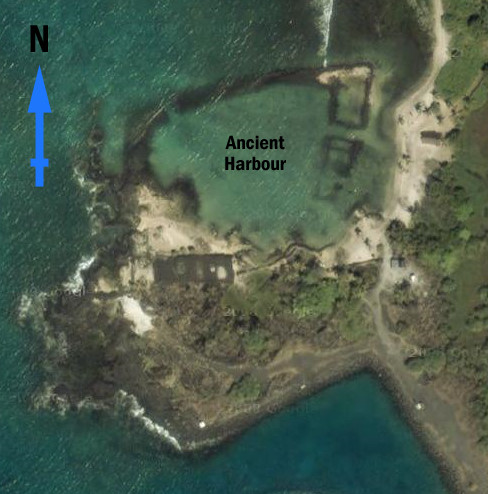
      My final day trip was to the Kaloko-Honokohau National Historic Park. This park is situated to the north of the modern Honokohau harbour, and encompasses an ancient Hawai'ian harbour and at least three ancient fish ponds. It has an interpretive site and a recreation of a traditional Hawai'ian boat storage hut, but for the most part it is still fairly natural with the exception of the port-a-potties at the south end. The ancient harbour is a shallow bottomed area protected from the sea by a natural point and an ancient man made sea wall. There are two rock pens that were probably used at one time to hold the daily catch. A mile or more of lava shelves and tide pools stretches to the north of this area and just inland are two ancient fish ponds--at least one of which (the Kaloko Fishpond) is being fully restored.

      The ancient harbour bed is home to good numbers of bonefish, but the bottom is not very fly friendly. In fact on my day trip visit and subsequent shorter trips I continually lost fly after fly. It didn't seem to help if they were heavily weighted or unweighted, the fishing gods demanded a sacrifice of flies. It was only during my last stop at this spot that I was able to find a fly that wouldn't catch on every cast--the bendback. These had to be properly constructed, but my losses dropped substantially--even if my catch rate didn't go up. Here again I had to make do with catching a few small trevally and the omnipresent cornet fish.

      Outside of the ancient harbour, the mile of beach to the north offers lots of possibilities. Provided the wind is low and the surf is manageable you can wade out some distance and cast beyond the reef edge into deeper water. It's also fun to chase the small trevally, coronet and various reef fish that haunt the flats. Oddly enough small orange and gold flies work well as attractors here as do the usual subdued streamers I favour. On most weekends this area is frequented by locals using lay nets and spinning gear.
      Small Trevally

      This year, for the first time I took a trip to the Kaloko fish pond at the northern limit of the park. I've walked down the beach towards the pond in the past, but had never actually reached it. I discovered that there is a rough access road off the highway just before the Costco turn-off heading north. The areas where you are allowed to fish are very limited and the water is shallow and brackish, but the pond is choked with milkfish and bones. I was only able to spend an hour here, but aside from snagging the usual fly-eating lava boulders I was finally able to hook up with my first serious gamefish of the trip--a milkfish. Now I can almost hear the snickering, but the milkfish (similar to ladyfish in the Caribbean) are incredible fighters and leapers and every bit as powerful as the bones I later encountered. I was fortunate enough to tag two of these brutes in the 8-12lb range, but unfortunate to have them both shake the fly after some tremendous leaps. A word to the wise about these fish: there are two species, only one of which will (reluctantly) take a lure. So if you find a large concentration and don't get a hook-up or even a follow, you may be calling on the wrong party.

      Big Fish Story

      East Dock
      The last three outings of my trip were early morning affairs and involved getting up before dawn and heading to Honokohau Harbour. There, well away from the surf and in between the docks and charter boats, I found pods of milkfish, goatfish, trevally and big mostly solitary bones cruising just above the bottom. This is not my idea of a "destination" fly fishing spot, but time was tight and the fish were there. For the next three days the ritual became get up at five, fish by six, and back by ten.

      The water in the inner east end of the harbour is relatively shallow--in the range of 18' to 25' depending on the tides. There are really only two good spots to get a somewhat clear cast in this area: from the shoreside connecting arm of the east dock or the end of the far eastern finger of the dock.  Here it's necessary to use either a full sink, a sink tip or a shooting head system. I used a 15' type VIII sinking tip and a narrow running line with a countdown retrieve at both locations. Weighted bugs as opposed to streamers were the order of the day, but even here with the mixed mud bottom the snags were such that if the fly touched down there was at least a one in six chance of losing it to a snag--as typical of most harbours, this one has a range of debris waiting to grab the unsuspecting fly.
      East End

      Until I got the gauge of the depth and how long I needed to count down the best I was able to manage was to interest a few of the colourful reef fish to follow and nip at my fly, but once I got the depth, fly and retrieve figured out I was rewarded with a tantalizing quick tug. Upon retrieving my line I saw that whatever had hit, had hit hard enough to part the 8lb mono tippet I was using. At that point I should have jumped up significantly, but instead I switched to 10lb fluorocarbon. After three or four casts I had another fish on, this one ran about 5 yards before the leader let go. Keep in mind that I had only enough drag on the reel to stop it from backlashing, so it was only the drag of the line in the water that was allowing the fish to break off. With my good flies lost to fish or snags and the time nearing ten, I returned to the condo and went surfing with my kids.

      Barred Goatfish
      I came equipped for my second visit to the harbour armed with heavier tippet and another four of the successful fly patterns from the previous day. After losing my second fish so quickly, I immediately went with four feet of the 12lb Ultragreen mono. It was tough getting any action in the early hours, but fishing off the eastern finger I was finally able to hook into something with a bit of strength--a 12" barred goatfish. This well marked fish is very similar to bonefish in terms of its feeding habits (mostly crustaceans) and overall shape. I was pleasantly surprised but its dogged fight--a bit like a fighting a large powerful brook trout with lots of fast downward pulls. I picked a second one up before returning to the spot I had fished from the previous day and finally tagged another bonefish. This time when the bonefish took the fly the line didn't part and the fish took off like a rocket. It made it about 40 yards when suddenly the line went slack. Now I'm not a religious man, but I'm surprised the gates of hell didn't open under my feet and suck me down given the amount of swearing I was doing. When I finally retrieved my line I discovered that the leader had held just fine but the #6 Mustad 3407 hook had straightened during the blistering run. Resigned I returned home to tye a few flies and take another crack at it the following morning.

      Opened Hook (after attempting to reshape it)
      Day three came and I was sure I had the equation solved, I had tied a half dozen flies on the heavier and larger Tiemco 811s hook. The drag was non-existent on my reel and all knots tested and tight. Again fishing in the early hours was slow with only two lost hooks to show for my efforts. I returned to the eastern end of the dock and managed to catch another goatfish and a puffer fish for my troubles. When I headed back to the centre dock it took only two casts to hook into the bonefish. This time it took and didn't stop until it ran out of room at the far end of the harbour, as it slowed I applied the pressure and brought it back. Again it shot off and again I got it back. It took a third run and this time I felt it starting to run out of steam. Trembling I brought it back towards me, prepared for another run but hoping that the fish was ready to come to hand. As I began to lift the fish slowly towards me, it found its wind again and hurtled off snapping the twelve pound leader cleanly at some invisible weak point. This time there was no swearing, just shocked silence. I reeled in and went back to the condo to have a cold beer and pack.

      Puffer Fish

      Final Notes:

      Overall the vacation was a success but the fishing obviously less so. It may have been a question of timing, tides or temperature, but the fishing seemed slower than on previous visits. Tagging into the bonefish and milkfish were a real treat, but that trophy shot eluded me. Maybe next time...

      The lessons learned on this trip included using stronger and sharper hooks, more bendback patterns (both bugs and streamers), stronger and more varied leaders, and to generally spend more time on the water.

      I will detail my "Leggy Blond" bonefish pattern in a subsequent post, in the meantime below are a few general shots from around the island.

      Aaron


      South Kiholo Bay

      Beach Access to Kiholo

      Sargent Fish

      Typical Fly Eating Lava

      Hibiscus
      Wrasse
      Family Hamming it up with Papya in Front of Fish Pond

      2010/09/20

      Line Review - Cortland Sylk (4 seasons on)

      I'll be the first to admit that I am not a huge fan of many of the fly lines made or distributed by Cortland. However, there are a few gems in their line-up including the old school 444 (Peach), the 444sl Camo Clear, and the more recently added 444 Sylk.

      The Sylk line initially received a lot of press as a synthetic silk line substitute. It's slightly stiff makeup, thin diameter and subtly mottled finish apparently does a passable imitation of the real thing, but it wasn't any of these features that drew me to the product. Indeed, my interest was only aroused when I watched an episode of the locally produced Sportsfishing BC. In it the host peeled the Sylk line off the reel in bitterly cold weather to demonstrate how it "pooled" on the deck of the pram without coiling. Having suffered through many lines that coil like slinkies in the cold (including other Cortland offerings), I was immediately smitten.

      After a fruitless search in the local shops I had one of them order the line from the distributor. This turned out to be a crucial mistake as the line took four months to arrive (I discovered later that "small" orders through the Canadian distributors were only shipped with larger purchases and my line fell victim to this problem). Not content to wait, I went on-line and was fortunate to find Herndon rods across the line in Washington state who stocked the line as a complement to their custom bamboo rods.

      One line out of the box looks very much like another in most cases, but the Sylk line was a bit different. Unlike most modern lines the first thing that struck me was the subtle cloth-like texture to the finish of the line. The mottled olive gold colouration was also a contrast with the generally brighter monochromatic fly lines available. A quick crimp test on the line indicated no significant "instant" memory issues, and the line diameter was as thin as promised.

      On the reel the Sylk line performs as promised with respect to line memory. Even after being spooled on a small diameter Hardy Flyweight for an extended period, the line comes off the reel without coiling. The line shoots very well out of the box and with only the occasional cleaning it has continued to do so for the past four seasons. Its casting profile is definitely enhanced by the relatively narrow line diameter and good weight/length ratio, and on the medium to medium-fast action graphite rods I favour it casts very well. I have tried both WF and DT designs and while I rarely have to cast them any distance, I would give the slight edge to the WF design for my casting style with higher weight rods and the DT for the light and ultralight rods (profile information is available here ).


      The Sylk line has a lot of advantages over other floating line varieties, but some of these same advantages also create shortcomings. For example, while the line is an excellent cold water/weather performer, it doesn't do as well in the heat of summer and some have complained that it becomes "sticky" in the heat. While I don't live in a climate where this is a significant issue, I could see this being a problem in areas where the average summer temperature is the high 20's (Celsius) and above. Another issue is with regard to the narrow line diameter, which results in a low floating line--definitely a consideration for some presentations. A final issue of note is with regard to the coating on the line. While this makes for a low memory line, it also means that it doesn't stand up to abuse from abrasion, nicks and the occasional boot against the rocks.

      I think it's safe to say that the perfect "all-purpose" line has yet to be invented, and given the variety of rods and fishing conditions out there, I don't think I would want one. For my part I have found the Sylk line works very well on most of the slower traditional action graphite rods and softer tip nymphing rods that I own (eg. Scott g-series, Sage SP & VPS-light, Grey's Streamflex, et al). I particularly like this line for small cold water streams with tight cover that require fairly accurate casts over shorter distances. Based on it's narrow diameter, low floating characteristics and subtle low memory construction, I feel this line is best suited to dry and wet fly presentations in moving water conditions. While I occasionally use this line for stillwater applications in the five and six weight range (particularly in cold weather), higher floating more aggressively tapered lines are perhaps better suited to most stillwater fishing conditions.

      Aaron

      2010/04/12

      A Tale of Two Caddis

      Well. It's been a long winter season.

      Throughout the period since my last post I have been concentrating the majority of my fishing opportunities on the local coastal cutthroat in the streams in and around the lower mainland of BC. Unfortunately trips have been limited as one weather system after another has blown in off the Pacific and blown out the local waters. I could have switched over to swinging for steelhead, but I've got issues with rejection, and while the stillwaters fish slowly throughout the winter months here, my interest in honing my stream fishing technique has kept me focused on moving water.

      Luckily the weather is slowly turning, and the frequency of the Pacific weather systems hammering our coast has slowly decreased. Over the past few weeks or so I've managed several short outings, and I'm gradually seeing increasing signs of insect life and fry movement. While the march browns (pictured at left) poked their antennae above the waters surface as early as February this year, it is only with the warming sun that the fish have begun to shake off the lethargy of the winter months and really begin to get aggressive about feeding.

      This talk of insects and activity brings me to the subject for this entry: imitating net building and free living caddis larvae. These two caddis types are quite ubiquitous on on almost all streams along BC's south coast, and for that matter on most of the cleaner cold water streams around the world. The fact that they are a protein rich food item available year round can not be overlooked when it comes to creating and carrying effective fly patterns.

      On a recent trip to the river I took the time to turn over a few rocks and examine some specimens. I have done this numerous times before, but it almost always pays to reacquaint yourself with the real insect before sitting down a the bench to do a little tying. Starting from this basis it becomes much easier to look at designing an effective imitation or at least a suggestive one. Of course other considerations impact the features you incorporate into a fly, not the least of which is the target water and species--for example, targeting cutthroat in a reasonably brisk, deeply stained brown/olive stream with relatively good visibility, shallow riffles, rock weirs and long pools (in short, my local water).

      I tend to rely on two styles of flies when fishing net building or free living caddis nymphs. Both involve the use of weight to present the flies at or near the bottom of the water column, both rely on similar colour schema to match the natural, and both utilize a scud style nymph hook to match the natural curved orientation of the drifting insect. Where they differ is in the profile and application.

      First up is the somewhat imitative fly shown next to the natural at right. This fly, very much a standard Czech nymph, does what a good Czech nymph should do-i.e. its narrow profile cuts through the water quickly and once there rides point up. It's also fairly realistic and works well in the slightly deeper water at the pool heads and along the seams where a long controlled drift is sometimes called for. The colour pattern seems to work well, balancing the flashy kelly green rib against the somber dark olive squirrel for a fly that is neither too bright or too dark.

      The fly at left, again pictured with the the natural, employs very much the same materials as the preceding one with the addition of a small gold tungsten bead and a silver badger hackle. I call this a White Water Caddis, but the pattern is very generic and similar to many coming from the benches of western North American fly tyers. I say "western" fly tyers, because in the words of one such tyer, "in the American West we fish a lot of tumbling, sometimes roaring waters. A normal day on a mountain stream or canyon river can be as much about the exercise as about the fishing." In such waters a strong attractive profile, particularly for smaller flies, is often called for. This fly follows that mold and its rough exterior and hackle provide that extra dose of movement as it's pulled through the white water riffles and into foaming plunge pools.

      Well. There you have it--a tale of two caddis, or rather a tale of one caddis and two flies. My point is not to suggest that one is better than the other (in fact both took an equal number of fish on my last outing in different water), the point is that by drawing together the disparate elements of observed insects and conditions, an understanding of the physical characteristics of various materials and constructions, and an almost intuitive sense of what fish key on, you can design (or choose) a fly style which will match the situation at hand... and by grace, catch you a few bright beauties.

      Aaron

      ***

      Net Spinner Czech Nymph
      • Hook: #18-#14 Mustad 49s
      • Underbody: Flattened .015" lead wire (2 layers)
      • Thread: 12/0 Olive
      • Over rib: 0X Fluorocarbon
      • Shellback: Olive scud-back
      • Rib: Kelly green mylar embroidery material
      • Body: Dark olive squirrel dubbing
      • Thorax: Black synthetic dubbing (cut short)
      • Tint: Olive pantone marker on body shellback, black over thorax

      White Water Caddis
      • Hook: #18-#16 Mustad 49s
      • Bead: Gold or black tungsten 3/32"
      • Underbody: .015" Lead wire (6-8 wraps behind bead)
      • Thread: 12/0 Olive
      • Rib: Kelly green mylar embroidery material
      • Body: Dark olive squirrel dubbing
      • Hackle: Coq de leon hen (silver badger)
      • Thorax: as body (to hide thread)

      2009/10/28

      Fishing From Heaven (part I)

      According to at least one internet source, Tenkara translates to "From Heaven". It's a nice sentiment and captures well the elegant simplicity of this style of fishing. With only rod, line, and leader it pares away the need for reels, spools and spare lines. Add a box of flies, a spool of tippet and perhaps a little floatant and you are in business.

      In this piece (broken into three parts), I'm going to relate some of my experiences with using the Tenkara rod on the water--specifically casting, presentation and fish handling. Keep in mind that all my observations relate specifically to the Ebisu 6:4 12' rod, although I suspect that there will be a fair degree of carry over between the various Tenkara rods available.

      Casting the Tenkara

      Casting the Tenkara rod is both like and unlike casting a fly rod. The basic physics behind casting is much the same, in that there is a defined back cast to load the rod and a forward cast to increase the stored energy and propel the line through the air. Where it differs from the fly rod is that the stroke is much shorter than with a fly rod (10/12 as opposed to 10/2 o'clock) and more wrist is used--creating more of a flick in the final delivery. The traditional hand placement is also different, with the index finger laying parallel to the rod and "pointing" toward the tip.

      I've tried several lines and tapers since purchasing my 12' (3.7 m) Ebisu model--a furled mono Tenkara line, a clear intermediate poly-tip, a length of level running line (with and without a tapered leader), and finally various sections of tapered fly line in a range of line weights.

      I originally ordered rod with the recommended 10' 6" (3.2 m) furled mono line. After a few perfunctory flicks in the backyard, I took the rod to a local stream for an on the water test. My casting strokes were a little awkward at first. I tried the recommended 10/12 o'clock cast but I found the forward stroke didn't really turn the line over well. However, increasing both the speed of the back cast slightly and the pause at the twelve o'clock position helped significantly. If I was able to load the line in the water prior to the back cast as I would on a spey cast, the results were better still. The only casting issue with this line is that the line lacks a measure of stiffness needed to really turn over larger flies--a minor issue because you would rarely end up using this rod for casting chernobyl ants and the like.

      The next "line" I tried was assembled using a tapered 5' (1.5 m) clear neutral density Airflo poly-tip, attached to a 6' (1.8 m) section of 8lb Berkley Vanish. I found that the heavy tapered tip was enough to turn over the stiff fluorocarbon section while allowing the rod to load more easily than with the furled line. This configuration worked particularly well for weighted flies over the short casting stroke of the rod. Of the various configurations tried, I found this the most useful for czech nymphing.

      Looking for a little extra distance for dry fly and streamer presentations, the third configuration I tried was an 11' length of narrow floating running line looped at either end. I used this alone and in combination with the poly-tip mentioned above. The former configuration worked poorly but the addition of the tip made casting very smooth, loading the rod easily and laying the line out straight and quietly on a few clear streams that I fish. The only drawback was that the extra length made landing fish much more difficult and there was loss of intimacy and feel that is the real benefit of this rod. I suspect a shorter running line in conjunction with the tapered tip would probably give better results and I may try this in future.

      The last series of lines tried were taken from traditional fly lines: two 15' (4.5 m) tips from a 5 and 8 wt multi-line set-up and a 15' section cut from a 2wt floating line. As expected the heavy tips went far beyond the limits of what the rod could handle. In both cases I was able to cast these lines, but the results were far from pretty--with rod heavily over-flexed and the delivery both awkward and heavy. The 2wt tapered line proved to be a completely different story. Casting was both effortless and smooth. Dry flies and soft-hackles turned over perfectly and alighted gently on the water. Heavy artillery also fired well with this line including medium sized streamers. However, at 15' the line was too long to control properly particularly with regard to fish handling, and as with the level line/tip combination contributed to a loss of intimacy and feel. Cutting the line first to 13' and finally to 11' (removing sections from the butt end) returned line control and sensitivity.

      Summary:

      Of the lines tried, the furled tenkara line, polytip and 2wt floating taper all proved adequate for casting with the 12' Ebisu. However, I feel that the 11' two weight tapered fly line was most appropriate for the rod. Sufficiently heavy enough to load the rod easily, this line can be adapted for the widest range of uses--including dry fly, soft hackle and streamer work. I would still give the edge to the polytip line for czech nymphing in deeper flows where the floating taper can interfere with presentation, but overall the floating tip is the most versatile.

      Next time I discuss the Tenkara rod it will be with respect to presentation. Until then good fishing everyone (I'm off to look for coho and cutthroat).

      Aaron

      2009/09/30

      2009 Canadian National Fly Fishing Championships

      The 2009 Canadian National Fly Fishing Championships were held this past week (September 21st through the 26th) in perhaps one of the most beautiful places on this continent--Fernie BC. Although the event was originally scheduled to be held in William's Lake this year, last minute difficulties necessitated the switch to Fernie and I for one couldn't have been happier because of the chance to fish one of the premier cutthroat rivers in North America. Event organizer, Kevin McIsaac, managed to pull together a very good event given the time available and aside from dropping one of the venues (Loon Lake) from the competition due to a lack of suitable vessels, the event progressed pretty smoothly.

      I was one of 45 entrants and came to the competition with Team Mustang, skippered by Wayne Yoshizawa. In addition to Wayne, I was joined by Norm Godding, Randy Paskall, Randy Patton, and our lovely support staff Leslie Godding and Deb Paskall. While all of us had at least some competitive experience under our collective belts (Wayne and Norm were part of the Gold Medal team in the Campbell River Nationals) we were a relatively "young" team in terms of the overall field of competitors.


      Leslie, Norm, Randy Paskall, Wayne Yoshizawa, me, & Randy Patton

      Practice:

      With the exception of Norm and Leslie, the bulk of the team arrived late on Friday the 18th and practice began immediately. With no knowledge of the eventual competition locales, we spent the first full day fishing a stretch of river just above what would eventually be upper venue on the Elk river between Fernie and Sparwood. This piece of water was lovely--a shelf just metres from the shore transitioned first into a deeper pool and eventually into a long slow tailout and back eddy. The cutthroat waited beneath the shelf edge and happily took a variety of dries, nymphs and soft hackles without significantly spooking. Aside from some time working pocket water before we arrived at this spot, most of the first day was spent here. In hindsight this probably wasn't wise, but based on the performance of various flies in this stretch of water we began to form a strategy around techniques and fly types.

      The second day was spent at Loon Lake, the venue that would eventually be dropped from the competition. Even before we had arrived this was pegged as the make-or-break venue of the competition, and thanks to Norm's scouting we were armed with knowledge of the lakes two main cold water springs and holding structure. In spite of swirling wind conditions we were able to get a few clean drifts through the holding waters and landed eight fish on the day on a variety of patterns.

      Satisfied that Loon was an open book to us we divided our remaining time between the river, which produced fish throughout our practice sessions, and Summit Lake which was for the most part generous to us. I should have been worried when I personally didn't get a strike on Summit, but my teammates' success (particularly Norm Godding's and Randy Paskall's) alleviated any lingering anxiety. In fact I felt comfortable enough to take a little time after the practice sessions to sneak up to Michelle Creek to fish dry flies to the willing cutthroat of that system.

      Competition:

      For those unfamiliar with the competition format, the events are usually divided into five separate venues. Those venues on streams or shore are in turn broken up into "beats" and assigned randomly among the competitors. In the case of the 2009 Championships there were three river and two lake venues chosen. The three Elk river venues were situated above, in and below the town of Fernie, while the two lake venues took place off the shores of Summit Lake--one on the Southeast shore (Summit 1) and one on the Northwest shore (Summit 2).

      Summit 2 Beat 8
      The venues weren't chosen to be easy and (as you can see from the picture at right) not for looks either. The two lake venues were shore based and competitors had the option of wading. Essentially the beats (100') were strung along the shoreline and numbered one through nine with the starting beat situated closest to the access points (South in the case of Summit 1 and North in the case of Summit 2).

      My first beat was Summit 2, beat 8 and the shot at right was the view looking North. This venue was the replacement for the cancelled session on Loon Lake and in spite of the bleak scree hill pictured, turned out to be a very productive spot owing to the relatively quick drop-off and proximity to the outlet stream at the North end of the lake. Brookies and rainbow were taken in this sector and fishing favoured the morning sessions. Throwing boobies and other floating flies with a sinking line hooked two fish for me, but unfortunately I wasn't able to bring any to hand. Team Mustang faired well on both lake venues, but only Norm Godding was able to land fish for the team on this particular venue, narrowly defeating Todd Oishi from the Cormorants to win his session.

      Summit one was a little fairer to the team, with Randy Patton taking his session using a general copper and black pattern, and Wayne Yoshizawa picking up a third place in his session using a black UV bugger.

      View From Elk 2 Beat 2 Downstream
      I'll be the first to admit I am not the stillwater angler that most of my teammates are, but I was prepared to do better on the river venues, and for the most part I was pleased with my performance. What I was not prepared for, and I suspect the same could be said about all of my teammates, was the water chosen for the beats on the river. On such a beautiful river, with such perfect fishing water, the organizers managed to find some of the most difficult to fish areas I've seen on any river system. Many runs were devoid of structure and those that had it often involved deep fast slots and near impossible to cross sections. I suspect that most of the competitors relished the challenge (I certainly did later), but the initial shock of finding that my first beat was a lousy section of water that I had skipped over during one of the practice sessions was just too much. In spite of literally swimming across the flow at one point to get to fishable water I was not able to bring any of the four fish I hooked to hand and blanked on the session.

      I'm sure the majority of the competitors hitting the river on the first day were likewise shocked at the unforgiving water chosen for the competition, except perhaps for those lucky few that had one of the smattering of very productive beats scattered through the competition. If there was one small criticism I would level at the Championship, it would be the inconsistency of the water quality in the river beats, but that's fishing and the luck of the draw.

      Deep Wading in Elk 1 Beat 2
      I managed to fair much better on my second river beat, drawing a relatively good looking beat in the upper Elk consisting of tailout water at the top end and having a small inflow creek at the bottom. I shared this beat (as well as the last one) with John Nishi, the eventual individual and team gold medallist. This arrangement was the norm in the competition, with two competitors dividing a single beat, fishing half of it in the first ninety minutes and then changing positions for the second 90 minutes. I won the coin toss and fished the better looking upper half of the beat, managing six whitefish and a single cutthroat. I followed this with two cutthroat in the lower section which was enough to secure a first on the session.

      Just an aside here on the Elk river whitefish. I was pleasantly surprised at the fighting ability of this little sportsfish and by its bonefish like ability to disappear like a ghost into the watery depths. Even in clearer and slower stretches of water the whitefish were virtually invisible, only betraying their presence when spooked by a clumsy wading angler. They proved to be an excellent competition target due mostly to their relative abundance on the Elk system and their tendency to favour water not normally home to cutthroat--which seemed to describe most of the competition beats.


      A Stealthy Approach on Elk 3 Beat 4
      I can safely say my final river beat was the toughest of the competition. Elk 3 beat 4 below town, a virtually featureless strip of shallow water, had bested eight anglers prior to our arrival on the final day of competition. Of the eight anglers only one had managed to hook and subsequently lose a single fish. Hopes were less than high going in, but the weather had warmed imperceptibly from the previous day we knew that there was at least one fish in the run. John won the coin toss and was the first to hook a small whitefish just prior to the changeover. He went on to hook a second one before I managed to finally land one. This pattern was repeated once more and we finished three to two, which turned out to be enough to take second and third on the session.

      Our team faired well on the river as a whole, but certainly not as well as we would have hoped. Including the one I missed on, we drew a total of five river blanks and this pushed us well down in the standings in spite of session wins by Norm Godding and myself on the river.

      Wrap-up:

      The 2009 Competition, in spite of a few technical glitches, turned out to be a great contest. The selection of river and lake beats made things tough from the get go, but it bought out the best in many of the competitors. Only the most skillful of anglers could make a silk purse out of a pig's ear, and there was certainly more than a few "pig's ears" in this contest. As a result it was no surprise that some of the big players from last year's competition made their way to the top again. On Team Mustang's part this meant that our most experienced members, Norm Godding and Wayne Yoshizawa, managed to keep the team's fortunes alive.

      We will see how things work out for upcoming contests, but the junior members of Team Mustang are already making plans to start working on our various weaknesses in preparation for future Nationals. Unfortunately Norm and Wayne won't have the same luxury, as Norm's strong showing was enough to gain him a position on the next Commonwealth Team heading for Wales in 2010, while Wayne will be joining the team heading to the US Nationals in Pennsylvania later this month. Congratulations to them both!


      Sun Over the Elk River Final Day

      Thank You's:

      I just wanted to offer thanks to all the individuals and groups that made the 2009 National Fly fishing Championships such a success:

      • Kevin McIsaac for organizing the event and herding us every morning through the competition
      • Gord Silverthorne, of the Kootenay Fly Shop for his guidance and time in laying out the river beats
      • Randy Taylor and John Nishi for laying out the Summit Lake venues
      • Randy Taylor for leaving his fishing gear at home
      • All those people that volunteered there time for the event including FFC's Bob and Brandy Sheedy, Neil, Marcell, Jeff, Aaron, et al.
      • The NFFC competitors
      • And most importantly the people of Fernie BC
      On a personal note I would also like to thank Wayne Yoshizawa for being such a patient and thoughtful team captain; Norm Godding for being the team anchor and great story teller; Randy Paskall for his ongoing encouragement; Randy Patton for his companionship and his love of flytying; Leslie Godding for being the team cheerleader and social co-ordinator; Deb Paskall for being our all-round support staff (and for rescuing my forgotten gear from the hotel parking lot); John Nishi for providing such stiff competition on our shared river beats; Todd Oishi for his past tutoring; Don Chatwin of Moby Nets; Wei Zhao of Admundson Outdoors; Korker's boots; Roger Baker and Hatch Reels; and finally my darling wife, Sheila who has yet to divorce me over my other mistress (fly fishing).

      Results:

      The following are unofficial results provided by Todd Oishi of FFC (name placings/fish)

      1. John Nishi 10/18
      2. Ryan Suffron 14/21
      3. Todd Oishi 15/19
      4. Philip Short 17/22
      5. Byron Shepard 18/23
      6. Sorin Comsa 19/16
      7. Norm Godding 20/14
      8. Chris Pfohl 21/22
      9. Robert Stroud 22/26
      10. Morgan Thorp 22/12
      11. Marius Dumitru 22/14
      12. Jason Baxter 23/7
      13. Clayton Hobbs 24/19
      14. Clint Goyette 24/16
      15. Ernie Kalawa 24/10
      16. Peter Huyghebaert 25/8
      17. Chris Iskiw 25/6
      18. Ron Courtoreille 26/8
      19. John Bisset 27/15
      20. Graham Murfitt 27/5
      21. Steve Harris 28/13
      22. Derek Nees 29/17
      23. Terence Courtoreille 29/8
      24. Wayne Yoshizawa 29/8
      25. Matthew Sparrow 29/7
      26. Jonathan Furigay 30/11
      27. Peter J. Morrison 30/11
      28. Jason Doucette 30/4
      29. Aaron Laing 31/11
      30. Matt Majors 31/5
      31. Ivo Balinov 33/15
      32. Arron Varga 33/8
      33. Randy Patton 34/4
      34. Colin Dunn 35/3
      35. Sunny VanDerKloof 36/3
      36. Jim Iredale 37/7
      37. JeanFrancois Lavalle 37/5
      38. Colette Stroud 37/5
      39. Alastair Grogan 37/3
      40. Rick Passek 39/1
      41. Randy Paskall 42/1
      42. Rob Viala 42/1
      43. Jeremiah Hamilton 45/1
      44. Teri Crutcher 45/0
      45. Jeff Weltz 45/0

      Team Results:

      1. The Cormorants 97/93
      2. Team Double Hauls 112/69
      3. Trout Rustlers 129/61
      4. Team VIP 131/36
      5. Team Endiable 145/61
      6. Ospreys 146/55
      7. Team Mustang 156/38
      8. Team Tight Lines 184/32
      9. Team Rio West Coast 198/8

      A few good memories...